Income Tax & Just Say No to Adjusting Entries – Week #46 of The Financial Operating System®
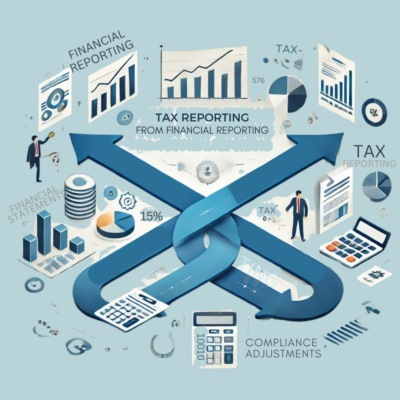
In the Income Tax & Adjusting Entries discussion, we explore the importance of accurate financial reporting and why businesses should avoid year-end tax adjustments in QuickBooks. Proper financial statements drive better decision-making while ensuring tax compliance.
Key Concepts
1. Tax Reporting vs. Financial Reporting
- Tax reporting focuses on minimizing tax liabilities, while financial reporting aims to provide accurate insights into business performance.
- Mixing these two objectives in financial statements can distort financial statements and hinder effective decision-making.
2. Pass-Through Taxation
- Most small businesses are organized as pass-through entities (e.g., LLCs, S-Corps, partnerships), meaning profits are taxed at the owner’s individual level.
- Owners pay taxes on their share of profits, not at the business entity level (except for some state taxes).
3. Cash-Basis Taxation
- Many small businesses elect cash-basis taxation for its simplicity and tax advantages:
- Taxes are paid only on cash received, not on accrual profits.
- This reduces the risk of being taxed on income that hasn’t been collected yet.
- Businesses often defer revenue collection or prepay expenses at year-end to minimize taxable income (a tactic that defers, not eliminates, taxes).
4. The Problem with Adjusting Entries
- Some tax preparers ask clients to post year-end adjusting entries in QuickBooks so that QuickBooks matches tax filings.
- These adjustments often:
- Move expenses or revenue to different periods.
- Reclassify owner wages or expenses to fit tax return requirements.
-
Drawback: Such entries distort the business’s financial records, creating misleading monthly and yearly reports.
Examples of Adjusting Entries:
- Owner Compensation:
- Reclassifying owner wages as equity distributions can make the business appear more profitable than it is.
- Asset Purchases:
- Adjusting depreciation schedules for tax purposes can skew monthly expense reports.
5. Why Say No to Adjusting Entries
- Adjusting entries done solely for tax reporting:
- Create discrepancies between operational and tax records.
- Undermine the utility of financial reports for decision-making and trend analysis.
- Instead, maintain separate books for tax reporting and financial management:
- Use accurate financial reports to run the business.
- Allow the tax return to reflect necessary adjustments for tax compliance.
Recommendations
- Separate Tax and Financial Goals:
- Keep financial reports focused on operational accuracy, not tax minimization.
- Engage a Tax Advisor:
- Work with a professional to optimize tax filings without compromising financial statement integrity.
- Plan for Taxes:
- Use financial reports to project taxable income and prepare for quarterly tax payments.
- Push Back on Adjusting Entries:
- Advocate for maintaining clean financial records, even if they differ from tax records.
Conclusion
Tax reporting and financial reporting have different purposes and should not be conflated. By avoiding posting year-end adjusting entries for tax purposes to QuickBooks, businesses can maintain accurate financial statements that support effective management and strategic growth. At the same time, working with a skilled tax advisor ensures compliance and tax minimization without compromising the integrity of financial reports used to manage the business.
Next Step:
Business owners can self-implement The Financial Operating System. Chapters are available to download at smartbooks.com/resources or you can buy the whole book from Amazon (the marketing firm version or the general business version).
If you would like assistance with implementation or would like to accelerate results for your business, please contact author Cal Wilder at cwilder@smartbooks.com or book a free consultation with our team directly using this calendar link.