Chart of Accounts – Week #26 of The Financial Operating System®
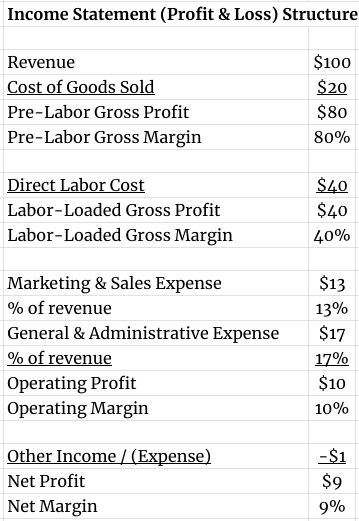
A key part of an effective Finance Stack is the chart of accounts. This week we review Chapter 13, which focuses on the importance of structuring and managing the chart of accounts as part of the Finance Stack’s “Process” component. The chart of accounts serves as the foundation for financial reporting, helping businesses structure their reports and generate meaningful insights.
Key Concepts
-
Definition:
- The chart of accounts is a list of all the accounts used to record transactions, which are categorized under revenue, expenses, assets, liabilities, and equity. These are also referred to as general ledger (GL) accounts.
-
Importance:
- The structure of the chart of accounts directly impacts the quality and clarity of financial reports.
- Proper organization and alignment with reporting needs enable businesses to produce accurate and actionable financial insights.
-
Challenges:
- The chart of accounts often evolves into a disorganized state over time, resembling “Frankenstein and spaghetti”
- Mismanagement of accounts leads to bookkeeping errors and inaccurate or less useful reporting.
- Shorter and simpler is better. Only add more granular accounts if they are key to being able to produce insightful and actionable reports.
-
Structure and Dimensions:
- A well-structured chart includes logical numbering, meaningful groupings, and clear account names.
- Payroll should be split by department (e.g., production, sales, general administration) for profitability analysis.
- Instead of elongating the chart of accounts, larger or more complex businesses can use dimension fields like Class and Location in QuickBooks to track results by business lines or segments.
- While Table 13.1 in the book provides a standard chart of accounts format, businesses are encouraged to customize it to align with their model and reporting needs.
-
Account Numbering:
- Logical numbering schemes improve navigation, data entry, and reporting. For example:
- COGS accounts could use 5000-series numbers.
- Marketing and sales could use 6000-series numbers.
- General and administrative could use 7000-series.
- Logical numbering schemes improve navigation, data entry, and reporting. For example:
Takeaway:
A well-organized and properly managed chart of accounts is critical for producing accurate, insightful financial reports. Aligning it with the business’s specific reporting requirements enables better decision-making and financial performance analysis. Customization and logical structuring are key to optimizing this foundational financial tool.
Next Step:
Business owners can self-implement The Financial Operating System. Chapters are available to download at smartbooks.com/resources or you can buy the whole book from Amazon (the marketing firm version or the general business version).
If you would like assistance with implementation or would like to accelerate results for your business, please contact author Cal Wilder at cwilder@smartbooks.com or book a free consultation with our team directly using this calendar link.