Adequate Capitalization: Can You Sleep at Night? – Week #48 of The Financial Operating System®
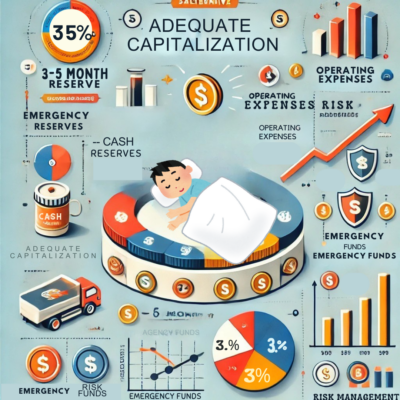
In the previous chapter, we tackled the complexities of sales and use tax compliance, emphasizing the need to navigate ever-changing regulations. Now, we shift to an internal focus about maintaining adequate capitalization to ensure a business’s financial stability, enable growth, and provide peace of mind to owners. It focuses on understanding capital needs, managing reserves, and balancing risk with operational needs.
Key Concepts
1. What Is Adequate Capitalization?
- Definition: Having enough capital (cash and other resources) to cover:
- Operating expenses
- Growth investments
- Unexpected downturns or known cyclical activity
- It ensures the business can operate without relying excessively on debt or owner contributions.
2. Signs of Under-Capitalization
- Constant reliance on short-term loans or credit lines.
- Late payments to vendors and struggles to make payroll.
- Difficulty funding growth initiatives or handling emergencies.
- Owner stress and inability to focus on long-term strategy.
3. The Impact of Under-Capitalization
- Financial Instability:
- Cash flow shortages can disrupt operations, damage vendor relationships, and hurt employee morale.
- Increased Expense:
- Beyond interest expense and later fees and finance charges, your people spend time dealing with payment plans and unhappy vendors
- Missed Opportunities:
- A lack of funds can prevent businesses from investing in growth, hiring, or pursuing new opportunities.
- Owner Stress:
- Financial instability creates sleepless nights and detracts from strategic decision-making.
- Owners may forego or delay their own payroll
4. Why are Many Small Businesses Under – Capitalized
- When launching a business, owners often bootstrap the business, meaning they invest as little cash up front as possible and try to pay expenses out of cash income.
- If they take out a loan to open the business or to acquire an existing business, the loan does not include much extra cash beyond what is initially required to open or to buy the business.
- Growing businesses often consume a significant amount of reported profit in financing accounts receivable and inventory and other working capital items.
- After launching with low capitalization, there are competing claims on where to allocate cash flow. Owners who forego salary and them take below-market salary have bills to pay and understandably priorities those needs over building capital in the business.
- In order to build capitalization, owners must pay tax on cash income they do not take home.
Takeaway:
While small business can achieve great Returns on Invested Capital and build wealth for the business owner, adequate capitalization is essential for stability and growth. By assessing capital needs, businesses can reduce financial stress, seize opportunities, and ensure long-term success. Proper capitalization allows owners to focus on what truly matters—growing their business—while sleeping soundly at night.
Next Step:
Business owners can self-implement The Financial Operating System. Chapters are available to download at smartbooks.com/resources or you can buy the whole book from Amazon (the marketing firm version or the general business version).
If you would like assistance with implementation or would like to accelerate results for your business, please contact author Cal Wilder at cwilder@smartbooks.com or book a free consultation with our team directly using this calendar link.