Evaluating ROI for Prospective Investments – Week #50 of The Financial Operating System®
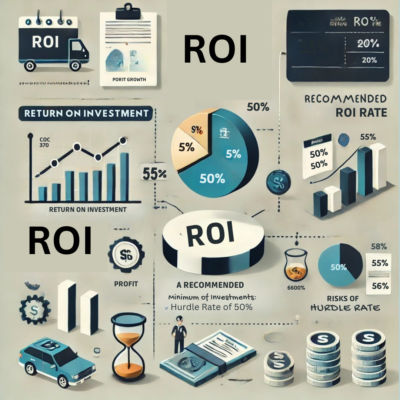
In the Evaluating ROI for Prospective Investments discussion, we explore how businesses can assess return on investment (ROI) before making financial decisions. Understanding ROI is critical for ensuring that every investment contributes to long-term growth, profitability, and stability.
Key Concepts of ROI
ROI Defined:
Evaluating ROI for Prospective Investments is essential for determining the efficiency and profitability of an investment relative to its cost. It provides a structured approach to assess whether business investments yield satisfactory returns.
The ROI formula:
ROI = Net Profit from Investment / Cost of Investment × 100%
For example, if you invest $100,000 in an investment and realize $40,000 in annual profit, that yields a 40% return on investment.
ROI calculations get complicated when multi-year investments and returns are involved.
Hurdle Rate for Investments:
A minimum ROI of 50%+ pre-tax ROI is recommended for small business investments. This hurdle rate is derived from:
- The high-risk profile of small businesses
- The need for strong returns to compensate for unpredictable outcomes
Lower ROI rates may be acceptable in certain cases, such as tax-deductible investments or long-term growth opportunities, but overly back-weighted returns can be risky.
Comparison to the Stock Market:
The public stock market has a historical annual return of around 10%, but small business owners face higher risks and fewer tax deferrals than stock investors.
To compensate for:
- Failed investments
- Unforeseen costs
- Annual profit taxation
Owners must aim for a higher ROI to maintain financial stability and profitability.
Limitations of Low ROI:
Projects with low ROI consume resources without yielding meaningful returns. This can:
- Reduce average realized ROI across all investments
- Increase financial strain on the business
- Limit capital available for future growth
The risk is especially high for small businesses that lack the financial resilience of larger companies.
Conclusion:
Small businesses must adopt a disciplined approach to ROI measurement, focusing on projects with high returns to compensate for greater risks and operational constraints. Ensuring investments consistently exceed a pretax ROI of 50% supports long-term profitability and financial health.
Next Step:
Business owners can self-implement The Financial Operating System. Chapters are available to download at smartbooks.com/resources or you can buy the whole book from Amazon (the marketing firm version or the general business version).
If you would like assistance with implementation or would like to accelerate results for your business, please contact author Cal Wilder at cwilder@smartbooks.com or book a free consultation with our team directly using this calendar link.